Anvil Priests

Gretna Green Anvil Priests
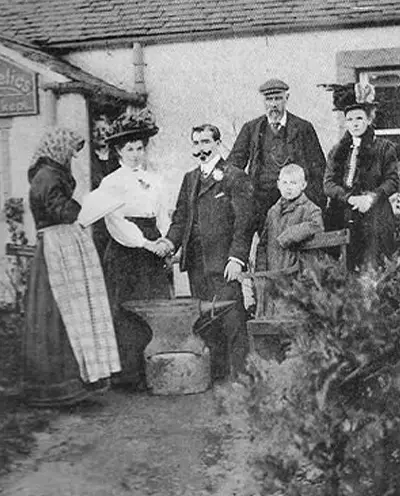
The blacksmiths of Gretna Green, Scotland were known as “anvil priests” because they sealed marriages by striking their anvils. The tradition of the anvil priest is a symbol of Gretna Green weddings
Joseph Paisley
Gretna Green Anvil Priest 1754 – 1814
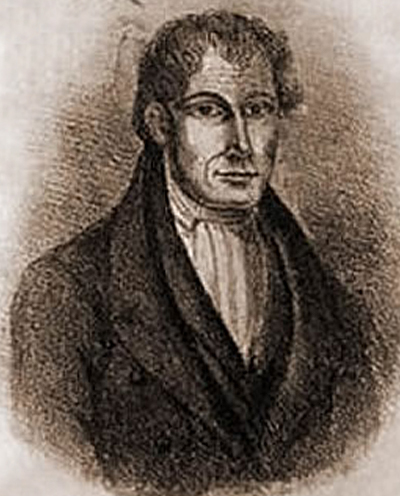
Paisley was born in about 1730 just south of Gretna Green, a tall young man, well built, and as folklore tells, so strong he could straighten a cold horseshoe with his bare hands! An ex-tobacconist and smuggler, Joseph Paisley became a blacksmith but soon realised there was more money to be had marrying young couples and he was one of the earliest of the new self-styled ‘priests’. As one of the first ‘Blacksmith Priests’, Paisley did much to enhance the folklore of Gretna Green.
When he first conducted marriages in 1753 he was warned that the “trade” was not strictly legal, not that he had any moral qualms about conducting the ceremonies. When he learnt, from an eminent jury-consult that the ceremony was indeed legal and binding, he went on to make a good living from the trade. One story tells how two couples required his services at the same time, and through a “trifling mistake” he married the wrong brides and grooms! Unabashed, he declared, “Ah weel juist sort yersels oot”.
In his later years he was described as: “grossly ignorant and insufferably coarse… an overgrown mass of fat weighing at least twenty five stone… who drank a good deal more than was necessary to his thirst”. It was believed that he was still conducting ceremonies from his deathbed during the year 1814.

David and Simon Lang
David Lang – Gretna Green Anvil Priest 1792 – 1827
Lang, or Laing, was born in 1755 and as a young man became a peddler, walking from village to village selling small items of drapery and haberdashery.
While he was working in Lancashire he was caught by the “Legalized Kidnappers” – the press-gang and was forced to serve several years in the British Navy. His ship was captured by John Paul Jones, considered by the English as a pirate, but by the Americans as the famous father of the American Navy and Lang became a member of the pirate crew. After a time when the ship was near the Solway Coast, Lang slipped away and swam ashore to Gretna Green.
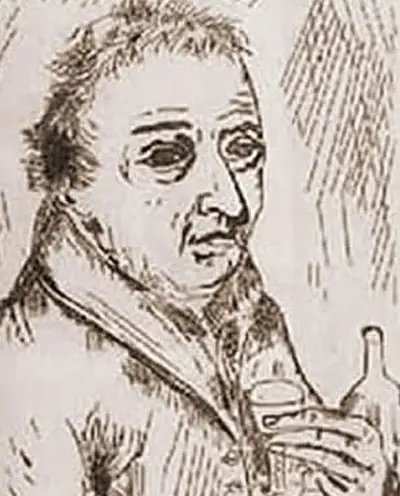
Lang was, in fact, the nephew of Joseph Paisley, the first of the ‘Blacksmith Priests’ and decided to try his luck at competing with his uncle. He entered the ‘marriage trade’ in 1792, aged about thirty-eight: “a fine looking man with a large full face, amiable expression and dark intelligent eyes”.
Lang built up a lucrative business for himself and was ranked equal with Paisley, “both in prosperity and in his addiction to the bottle”. He dressed in a clerical style in accordance with his self-important air, which earned him the nickname “Bishop Lang”.
He married many distinguished couples and was involved in the marriage of the notorious Wakefield, abductor of Ellen Turner. He was called to give evidence at Wakefield’s trial at Lancaster in 1827. Apparently, the journey was too severe for the old man and he died the same year, at the age of seventy-two.
Simon Lang – Gretna Green Anvil Priest 1827 – 1872
Son of David Lang, Simon Lang was born in Springfield, the adjacent village to Gretna Green. After his father’s death in 1827, he became the only ‘Blacksmith Priest’ of importance who was actually born in the village. Simon Lang was described as “a kind of happy medium, neither tall nor short, in face somewhat spare, and not much otherwise in limb”. He had a keen sense of humour and had a good reputation for integrity.
Like other priests of the time, he felt the substantial drop of marriages around the year 1837 and turned to weaving and smuggling to support his household budget. He managed to remain in the “priesthood” till the last, and he died in 1872.
Robert Elliot
Gretna Green Anvil Priest 1814 -1840
Elliot was born in Northumberland, the son of a farmer. While working for a stagecoach company, he met Ann Graham, the granddaughter of Joseph Paisley. They were married in January 1811 at the village church in Gretna Green, as was considered proper; very few of the local people were married in the ‘irregular way’.
The couple lived with Paisley, and Elliot assisted the old man with his marriage ceremonies. When Paisley died in 1814, Elliot was a natural successor and he continued the marriage trade.
In 1842 Elliot had his memoirs published. In them, he states that he performed between 4,000 and 8,000 ceremonies. He also claims that he was the only priest working in Gretna Green at that time and had been for the last thirty years. However, it had been put beyond doubt that there were at least two other priests at the time.
The majority of Elliot’s history is taken from his memoirs in which he also gives accounts of “noteworthy elopements” but it is likely that the events of some of his stories occurred before he became a Gretna Green Priest. Unfortunately, the majority of his registers and those of Paisley were lost when Elliot’s handicapped daughter set fire to her bed one night and burned herself to death together with the registers that were stored on the bed’s canopy.
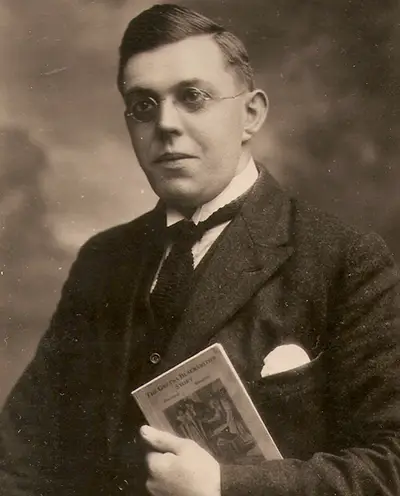
Richard Rennison
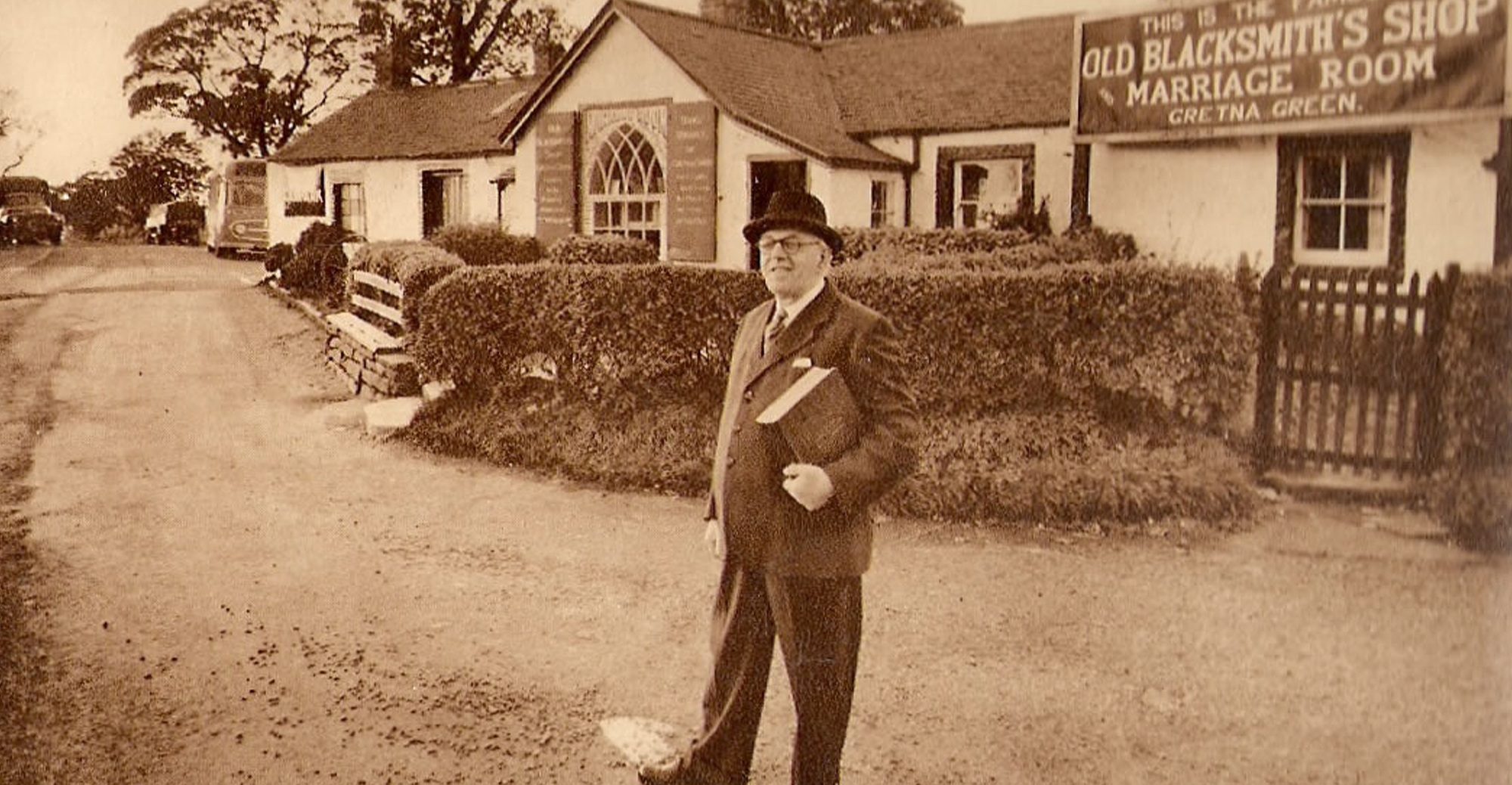
The Last Gretna Green Anvil Priest – Gretna Green Anvil Priest 1926 -1940
Richard Rennison was a saddler from Northumberland, who came to Gretna Green in 1926 after hearing that there was a vacancy for a resident ‘priest’ at the Blacksmith Shop. He was dark-haired with a ruddy complexion, rather stout and of average height.
He started “marrying the folk” as he called it, almost immediately. A showman with the gift of the gab, he had the right knack for the job. Rennison was once asked what hours he kept, to which he replied “Doctor’s hours”. Like other Gretna Green Anvil Priests before him, Rennison carried on the tradition of Gretna Green Anvil weddings and was ready to answer a marriage call at any hour of the day or night.
Many a time there was a knock on his door in the early hours of the morning. He would quickly go to the village for his two witnesses and marry the anxious couple there and then before putting the couple to bed and going to bed himself. If the parents in hot pursuit later arrived, he would deny having seen the elopers.
He enjoyed and was proud of “his marrying trade”. A great storyteller, one of his favourite tales was how, after attending a funeral on New Year’s Day in 1931, he arrived back at the cottage adjacent to the forge to find eight couples on his doorstep waiting to be married! Practising his marriage trade at a time when the Church and Establishment were trying to shut it down, Rennison liked to point out that his name, when written in reverse, spelt “No Sinner”!
Like his predecessors, he lived in the cottage and by the time the law was changed in 1940 he had conducted 5,147 marriages. He continued to work in the Blacksmiths Shop until 1962 when he retired.
Granny Graham – the ‘Original Priestess’
circa 1938
Proclaiming herself the “original priestess”, Granny Graham was one of the local characters who tried to make a bob or two out of the marriage trade before it was made illegal in 1940. Working in the 1930’s, Granny Graham conducted marriages in private houses around Gretna Green. She was said to look “like a typical granny, a smallish old body, dressed in black”.